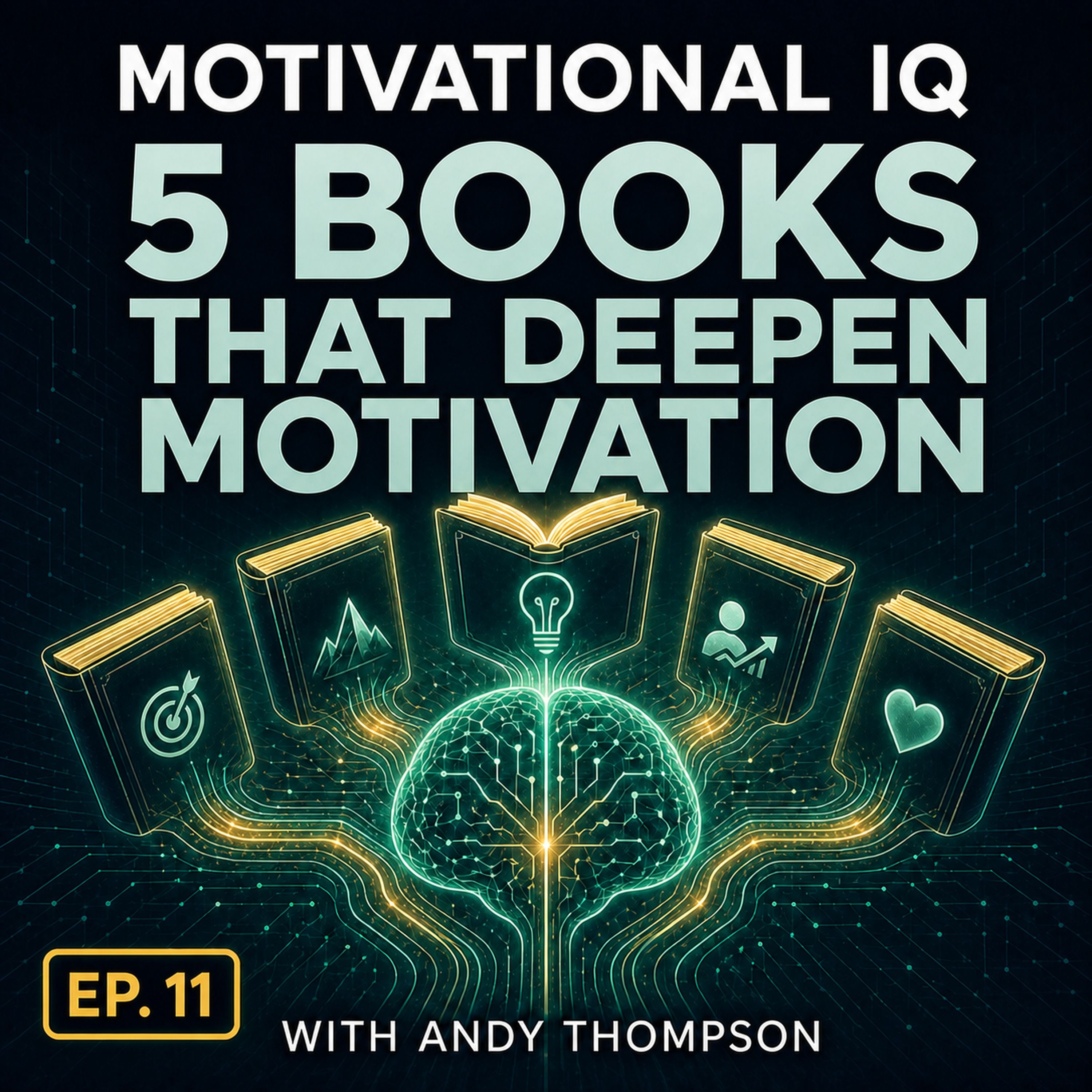
Show notes
Key Takeaways
- [01:30] Transformation includes work that is not exciting. A powerful idea will not change much until you read, reflect, practice, and repeat. Choose one useful principle from what you read and put it into action before reaching for the next insight.
- [03:14] “Unmotivated” may be a rational response to the environment. Before blaming someone’s attitude—including your own—look at the choices, feedback, safety, support, tools, relationships, and measures surrounding the behavior. Ask what the environment is currently teaching people to do.
- [04:03] Carrots and sticks can weaken complex work. Dan Pink’s autonomy, mastery, and purpose framework gives leaders a better diagnostic: Does this person have meaningful choice, a way to improve, and a reason the work matters?
- [05:20] A miserable job can be diagnosed without an engagement survey. Patrick Lencioni’s three signs—anonymity, irrelevance, and immeasurement—suggest three direct questions: Do I know this person, can they see whom their work helps, and can they judge their own progress?
- [06:41] Change is a design problem, not merely a willpower problem. Influencer starts with measurable results and vital behaviors, then examines personal, social, and structural motivation and ability. Crucial Conversations adds the safety and shared understanding needed when the stakes and emotions rise.
- [09:02] Leadership techniques cannot overcome seeing people as objects. Leadership and Self-Deception challenges us to notice when we turn people into obstacles, instruments, or explanations for our own behavior. Remembering why the person and the work matter changes both what we do and how we do it.
Notable Quotes
[01:30] “Everybody wants transformation, but very few want the hundred hours of boring work to get to that transformation.”
[03:14] “What if the person that you call unmotivated, be it yourself or someone else, is actually responding rationally to an environment that you helped influence or create?”
[04:24] “Autonomy, mastery, purpose. Autonomy is choice. Mastery is action. What? And purpose is why.”
[11:06] “We need to help create places where they'll respond with authenticity, psychological safety, and a full contextual understanding of what, why, and how.”
[12:07] “Motivation isn't, it's not something we do to people. It emerges from how we are seen, how others are seen, how they're supported, how we feel supported, how they're equipped, how we feel equipped, and how they're led.”
Resources Mentioned
- Drive by Daniel Pink — autonomy, mastery, purpose, and the limits of carrot-and-stick motivation
- Dan Pink: “The Puzzle of Motivation” — TED — the talk Andy remembers as an important turning point
- Daniel Pink’s books — including When and To Sell Is Human, which Andy also mentions
- The Truth About Employee Engagement by Patrick Lencioni — originally published as The Three Signs of a Miserable Job; anonymity, irrelevance, and immeasurement
- The Table Group — Patrick Lencioni’s organization and its work on healthier, more effective organizations
- Books from Crucial Learning — Influencer (now updated as Crucial Influence) and Crucial Conversations
- Leadership and Self-Deception — The Arbinger Institute — self-deception, self-betrayal, and seeing people as people rather than objects
- B. F. Skinner Foundation — behavior, consequences, and reinforcement
- Albert Bandura — Stanford University — social learning, observation, modeling, and repetition
- William James — Stanford Encyclopedia of Philosophy — habit, psychology, and human action
Call to Action
Choose one person you have quietly labeled unmotivated—or choose yourself—and resist trying to fix the person this week. Instead, audit the environment: Are they known? Can they see why the work matters? Can they measure progress? Do they have meaningful choices, the ability to do what is expected, and enough safety to tell the truth? Change one condition, observe what happens, and then choose one of these five books to help you go deeper.
Connect with Andy Thompson and Motivational IQ
Visit Motivational IQ for the show and The WorkJoy Project to learn about Andy’s coaching, consulting, workshops, project rescue, free consultation, and sliding-scale options. Connect with Andy Thompson on LinkedIn, subscribe to the podcast feed, and share this episode with a manager, teacher, coach, or parent who wants to create a more motivating environment. If the episode helped you see motivation differently, please rate or review the show so more people can find it.
Visit my website, www.theworkjoyproject.com or www.motivationaliqpodcast.com
https://www.linkedin.com/in/theandrewthompson/
The ways these ideas, concepts and models grow is through application, sharing, and stories. Please share with a friend, leave a review, and like us wherever you listen.